Orks of Morak
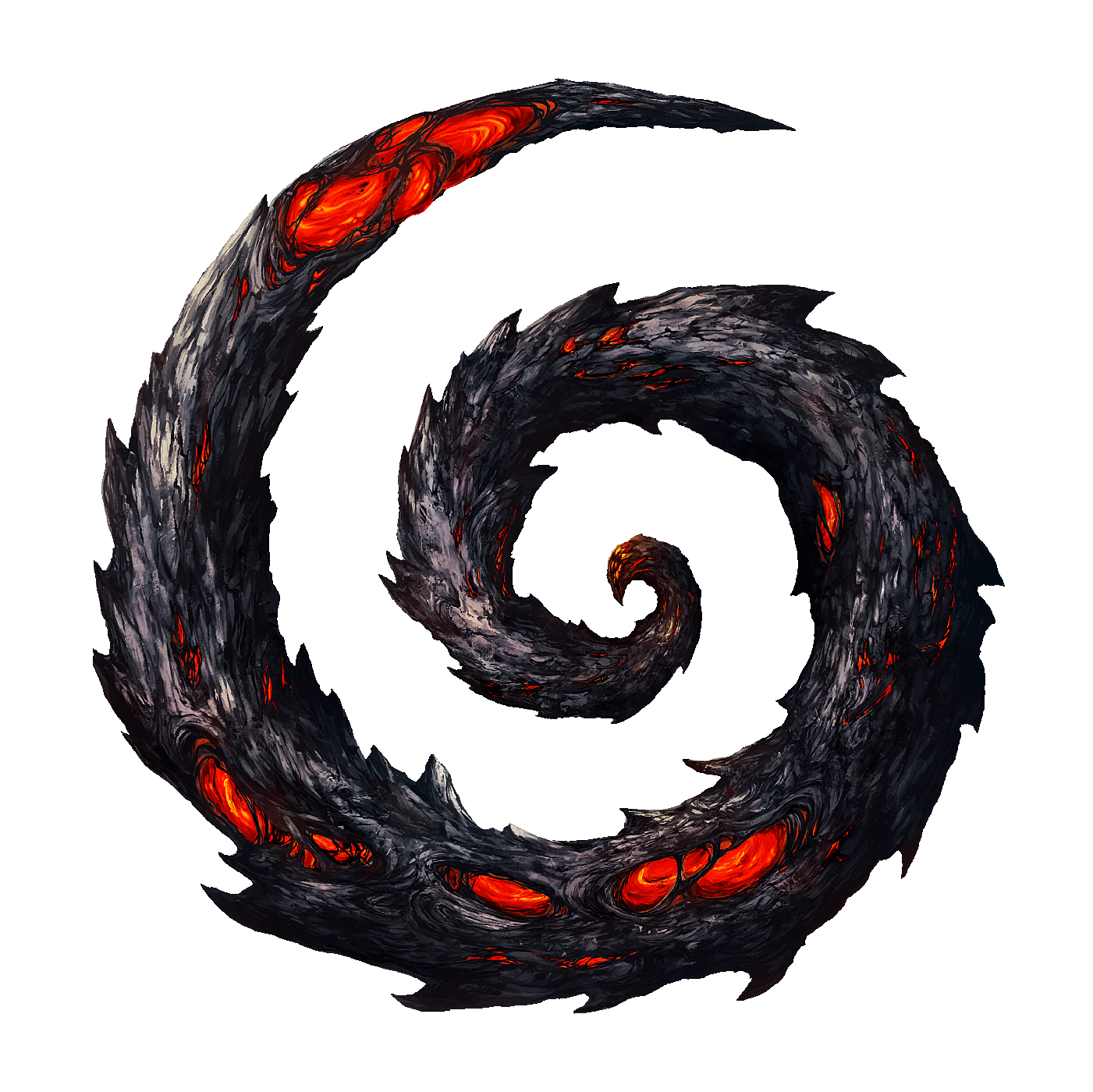
Marching under the banner of the Fire Dragon, the armies of the orks are constantly on the march, forever seeking new cities to raze, new nations to conquer, and new people to sacrifice or enslave.
To the orkish warrior's mind, excessive planning is a coward's resort, while fancy tactical chicanery is a sure sign of effeminacy. Instead, orks rely on a combination of unrelenting aggressiveness, death-defying bravery, and the natural-born bully's instinctive eye for weakness.
While their behavior might seem erratic and irrational to outsiders, the orks themselves see every battle, every sacrifice, and every torched village as steps on the road to the Big Burning, an ork-administered apocalypse in which Agon is scorched clean and made ready for the reign of the Fire Dragon.
See race page for info on attributes.
Morak
Much of he orkish homeland is covered by fetid and insect-haunted swamps, in which the traveller sinks ankle-deep in sticky, ubiquitous mud. Rain falls very frequently in Morak, and a combination of clouds and swamp-mist ensures that sunlight rarely - if ever - disturbs the murky ambience.
The northern third of Morak is dominated by a number of active volcanoes and the lava streams which issue from them. The land between these volcanoes is jagged, rocky, and as barren as the southern swamps are fecund.
The orkish realm lies in the central eastern part of Agon's main continent. A state of unending war exists between the orks and both of their closest neighbors - the humans of Mercia to the south, and the dwarves of Dvergheim to the northwest. To the northeast of Morak lies the jungle continent of Yssam, which is the domain and playground of a celestial dragon, while the neutral city state of Silvertown lies to the southeast. To the west, the Pall of Oncylus slowly spreads accross Agon's heartland.
Enemies: The Sadayel
In the darkest, remotest parts of Morak's swamps stand the villages of the Sadayel, a race of resourceful and semi-civilized lizardmen. Though otherwise peaceful, the sadayel nourish a marrow-deep hatred for the orks, who have been their (largely victorious) rivals in an age-long struggle for the meager resources of the swamp.
Sadayel villages occupy interconnected wooden platforms which rise on stilts from the swamp's mud. They tend to settle in wooded swampland or mangrove forests, building their houses among the trees and in harmony with nature. Sadayel settlements are found throughout Morak's swampy regions.
Slight and short-statured, the sadayel may be mediocre hand-to-hand fighters, but they are excellent archers and competent spellcasters. They sometimes bring groups of flying snakes with them into combat, and frequently ally with akathar bird-men.
Flaming Skull
Lava rivers cut through and encircle the orkish capital, which lies in the shadow of an eponymous and very active volcano. Minor eruptions of Flaming Skull are frequent, and the rain of ashes has recently grown so thick and steady that the sun is pleasantly (to orkish eyes) veiled by a black, noxious cloud.
The orks welcome the increased volcanic activity, regarding it as a sign that the Fire Dragon is about to wake from her slumber. When the nearby port village of Flayed Elf was completely destroyed in a recent eruption, unperturbed orkish authorities dispatched slave teams to construct a new port right next to the ruins of the old one.
In the center of Flaming Skull rises the Great Stairs, a huge pyramidal structure which contains the Fire Dragon's lair. Every day, dozens or even hundreds of victims are thrown into the ever-burning interior of the Great Stairs, where they are swiftly consumed by the draconic deity's flames. The Fire Dragon currently rests and slumbers, but according to orkish clerics, the hour of her re-emergence draws nigh.
Close to Flaming Skull lie three starting villages, which is where orkish adventurers embark on their careers. New Flayed Elf is a large port community, watched over by a lighthouse and a coastal keep. Metal Heart lies on an island surrounded by deep swamp, while Chopping Necks stands on a series of interconnected pillars which rise from a lava lake.
Culture and religion
Orks see themselves as purely a warrior race, and all manual labor in Morak is performed by slaves. The vast majority of these unfortunates are goblins, but a sizable majority belong to a clan of svartdvergir who were enslaved after migrating south from Dvergheim.
The orks worship the Fire Dragon, a chaos deity of awesome power, who quite recently unified the warring orkish tribes under her rule. Currently resting inside the Great Stairs in Flaming Skull, the Fire Dragon rules through Grand Messenger Arxanthos, a red dragon who receives dream-decrees from the slumbering goddess (or just claims to do so), and who commands a sinister priesthood called the Dragonbound. When the Fire Dragon is fully recuperated, she will emerge to take control over a united orkish army, and together they will unleash the Big Burning upon the world. In the meantime, the orks - who can hardly wait - do their best to prepare the ground for this rampage to end all rampages.
Since the Fire Dragon requires a steady stream of sentient sacrifice, orkish armies regularly raid for fresh victims. All resulting captives are hauled back to Flaming Skull, where they are dragged up the Great Stairs and thrown into a fiery pit which leads to the Fire Dragon's lair in the structure's interior.
The traditional leader of the orkish nation is the Big Head of Flaming Skull, a sort of high king whose power over the tribes has waxed and waned through history. The current Big Head is Uzrok Deathfist, a traditionalist who resents the power of the priesthood, and who suspects that Arxanthos is faking the dream-messages from the Fire Dragon, which frequently involve bringing treasure and food to Arxanthos's lair in Emberhall.
Movers and shakers
Big Head Uzrok commands one of the most active armies on Agon, and the Iron Orks are an elite group within that army, its members selected for strength, ferocity and cunning (in that order.) Utterly loyal to Uzrok, the Iron Orks answer to the Big Head directly, and some speculate that building their strength is the gambit in a scheme to wrest power from the Dragonbound.
The Defenders of the Swamp are an orkish order of knights who have dedicated their lives to keeping the swamps of Morak clean of unwanted elements. Since Morak has no shortage of monsters or enemies, the Defenders are kept very busy indeed, and their membership tends to attract orks that are even more fond of violence than most.
The Dragonbound are an extremely powerful group of fundamentalists, who have dedicated their lives to the Fire Dragon, and who show their loyalty by cutting off their lips and covering their bodies in self-inflicted scars. The Dragonbound are not averse to working behind the back of Big Head Uzrok, who they see as a mere pawn (and an insolent one, at that) in the Fire Dragon's game.
The Erodach are powerful humanoid creatures who are masters of the element of fire. They are haughty and arrogant, and are famous both for searing intelligence and cold cruelty. The origin of the Erodach is unknown (they are not natives of Agon) and their motives are veiled in shadow. They claim to be staunch allies of the Fire Dragon and the orks of Morak, but many assume that they have come to Morak for good reasons that they choose to keep hidden.
The Guild of Thugs is a highly organized - by orkish standards - outlaw band, who seek to reduce Morak to a state of anarchy, so that they can enjoy free rein. The Guild undermines the rule of the Big Head whenever they can, and they despise the Dragonbound priesthood.
What makes the orks special?
The orks throw all their weak or sickly children into the swamp. As a result of this process of evolution through orkish selection, the inhabitants of Morak are physically stronger than most other races on Agon. Orks also have a natural aptitude for melee combat and for other skills that involve brute force.
The orkish mount is an enormous, vile-tempered beast called the death pig. This monstrosity sweats constantly and profusely, covering its black, hairless hide in a glistening layer of oily liquid. In combat, the Death Pig kicks with powerful hooves and slashes with large, curved tusks which protrude from the sides of their mouths. Orkish smiths strengthen these natural weapons with a thin coat of leenspar, which is then decorated with black orkish runes. The eyes of the Death Pig are tiny red sparks of malevolence which almost disappear in the thick folds of their leathery foreheads.
Orks see most other races as little more than sources of income, sadistic fun and sacrificial victims. The only other race that the orks can comfortably form clans with are the mahirim, who they respect for their bravery, cunning and skill in battle.
How the orks see the world:
"All hail the Fire Dragon - bringer of death, destruction and orkish superma… sumepra... bestness. When Flaming Skull rages, the Fire Dragon stirs, and since a waking goddess needs food, we must triple the rate of sacrifice immediately!"
- Izkruul Viletongue, Dragonbound priest.
"If we sacrifice everyone else, who will be left to build, clean and make food? Only us, that's who!!! If you ask me, the Dragonbound are crazy and Grand Messenger Arxanthos is a big, fat, talky cheat."
- Arhard Deathspear, Iron Ork officer.
"The mud around your feet… the buzzing of a million little insects… the rich smell of rotting vegetation upon the wind… there are many places in the world, but no place beats the swamps of Morak."
- Biggor Stonecrusher, Defenders of the Swamp knight.
"In the olden days, it was every ork to himself and the will of the strongest always previle… prelaive… decided. To bring back those happy days, when death was everywhere, we must slay the dragon and chop off the Big Head!"
- Angrar Stabface, Guild of Thugs member.
"Though indubitably breath-taking, my own scintillating splendiferousness is a mere shadow of the supreme magnificence that is the Fire Dragon. She dreams in her sleep, and those dreams are conveyed to me, her Grand Messenger: Arxanthos the Sublime, the Immaculate, the Chosen Among Dragons."
- Arxanthos, Grand Messenger of the Fire Dragon.
How others see the orks
"A band of mud-brained swamp-bullies, whose only defense from extinction is the disease-ridden awfulness of their homeland. Soon, the human armies will march north and clean out that stinking nest forever."
- Simeon Ramsfleet, human Knight of Malregard.
"Guided by the cruel cunning of the Fire Dragon and her priesthood, the orks are becoming more than just a disorganized race of raiders and murderers. We should seek to destabilize the current regime by subtly encouraging the ambitions of Big Head Uzrok, while supporting the delightfully reactionary policies of the Guild of Thugs."
- Cirail Silverglow, mirdain merchant
"In a world full of weakling prey, the orks are distinguished by their great physical strength and near-limitless bravery. What they lack in shrewdness and predatory instincts, they compensate for with size and a wild-eyed enthusiasm that the lesser races find intimidating."
- Yalena the Wise, mahirim huntress.
"Half-witted swamp vermin! Though we have no interest in their vile homeland, the alfar will still take the time to eradicate every living thing in it that is larger than a small lizard."
- Sihgan Ghostshoon, alfar mage..
"Orks do not know how to build, only destroy. If it wasn't for their slaves, they would still be living in pathetic little mud hut villages scattered throughout the swamp."
- Skuldgeir Graythrone, dwarven bureaucrat.
History
Five hundred years ago, a massive eruption of the Flaming Skull volcano was taken as a signal by Gutlands orks, who launched a particularly determined campaign of conquest. Slightly more than one hundred years ago, all of Morak was finally united under the rule of Flaming Skull. The worship of other gods than Azhi Dahaka was eventually outlawed, and the old tribal gods are now – practically speaking – dead and forgotten.
Two hundred years ago, the orks launched their first major campaign under the banner of the fire-dragon. They crushed and enslave the svartdvergir tribes of northern Morak, who had settled there after the Dvergheim civil war. As as result of this extremely successful campaign, the orks of Morak gained control over a large number of highly skilled svartdvergir smiths and stoneworkers.
Eighty years later, the orks moved to enslave the goblin tribes that inhabited the swamplands of central Morak. By now a highly organized military force, the orks were able to decisively subjugate all major goblin tribes.
Society
In many ways, slaves built the kingdom of Morak. Countless goblins have died building cities, roads and monuments, which in turn were planned and engineered by another, more skillful group of slaves, the svartdvergir. Svartdvergir smiths have also revolutionized Morakian smithcraft, inventing new weapons and armour-types, and improving old designs which their masters are fond of.
The policy of taking slaves, instead of just killing everyone, developed due to the influence of Azhi Dahaka, a fire god originally worshipped by the orks of the central Gutlands.
Most orks, male and female, see themselves as warriors first and foremost. While some eccentrics take up trades because they feel like it, extremely few actually need to do so: In Morak, menial tasks are left to the numberless hordes of slaves.
Orkish clans feud and fight among each other, just like they always have done. Technically speaking, they all owe allegiance to Flaming Skull, but the king generally leaves them to their own devices. This is a considered policy: The ever-belligerent orks need a steady outlet for their aggression, and lasting peace in Morak is neither possible nor desirable, in the eyes of King Grrak. When the time is right, Grrak will summon all clans to join him in a crusade against the other races of Agon. In the meantime, he needs the orks to stay combat-sharp and content.
The Court at Flaming Skull
Flaming Skull lies in the heartland of Morak, in the shadow of an active volcano. The volcano is constantly spewing out smoke, and at irregular intervals, minor eruptions threaten the surrounding area. At these times, Grrakk’s city is covered in ashes and daytime darkness.
When the old king dies, the orks choose the finest warrior in Morak to be their new leader. In order to find the right ork, a large tournament is held, and all the clans are invited to send their champion. The last ork standing becomes king of Morak.
Grrak won such a tournament ten years ago. His victory was fortunate for the orkish nation: Grrak embodies many of the traits that orks value in a leader. He is big and physically strong, he is ambitious, and he is nearly as cunning as he is cruel.
In his youth, Grrak lost an eye to a sadayel arrow. To this day, he wears an eye patch made from the green hide of the lizardman who fired the fateful arrow. Even for an ork, Grrak hates the sadayel with extreme ferocity, and he is often away on military campaigns against them.
Grrak is exceptionally tall and muscular, and despite being nearly forty, he is physically in his prime. Grrak commonly wears a beautiful suit of plate mail, and wields his “lucky” orkish two-bladed axe, which has been a companion for decades. Other than a simple golden nose ring, Grrak wears no jewellery.
The king belongs to the Fatal Tusk clan, and in accordance with tradition, this clan now dominates official life in Flaming Skull. These days, generals, slave overseers and high priests tend to be relatives or friends of Grrak the One-Eye.
The Iron Orks
The Iron Orks is an elite unit of warriors. Unlike most orks, they wear plate mail armour and plate helmets. The traditional colours of the regiment are red and black: Black is used as the background colour, while all symbols and embellishments are red. Like their king, the Iron Orks prefer two-headed greataxes that are wielded with both hands.
Instituted by the present monarch, the Iron Orks are the bodyguards of the orkish king. The unit is headquartered in a newly erected building that stands less than two hundred meters from the castle of the lords of Flaming Skull. The symbol of the Iron Orks is the red greataxe of Grrak, imposed on the outline of the Flaming Skull volcano.
Allies and enemies
Since the dawn of creation, Azhi Dahaka has been locked in an eternal struggle with Draupnir, the feathered serpent. Draupnir seeks to protect the life and happiness which Azhi Dahaka seeks to devour.
On Agon, Draupnir sees it as his primary task to counter the spreading power of Azhi Dahakas orks. Like the Fire Dragon, Draupnir is bound to his home plane, Shimmerdal, and he must act through agents. Chief among these are the sadayel, a race of intelligent lizard men native to Morak, who Draupnir has helped in the same way as Azhi Dahaka has helped the orks.
While most lizardmen are crude savages, some of those who dwell in Morak have built a civilization. Inspired by Draupnir, they have turned swampland into farmland, built beautiful villages, and mastered such arts as weaponsmithing, writing and wizardly magic.
The Sadayel wear loose-fitting, white scale mail that bears a passing resemblance to the scales of a silver dragon. They wield graceful longswords that are made of the same whitish metal as their armour, and carry round, metal-plated shields. They regularly throw volleys of thin, metal-tipped spears at their opponents before entering melee combat.
In honour of their god, the Sadayel wear feathered headpieces, and decorate their shields and spears with colourful bird feathers. Their shields are commonly decorated with a portrait of a feather-clad serpent.
The Sadayel are the sworn enemies of the orks. While less fearsome warriors than their foe-race, they claim superiority in the ways of magic.
Goblins
The swamps of Morak teem with these green-skinned humanoids. They live in ill-organized tribes, and subside on a combination of hunting, gathering, and opportunistic scavenging.
The orks have enslaved large numbers of goblins, who are forced to perform a wide variety of tasks, from housework to hard labour. They are kept in abhorrent conditions, in so-called Worker Pits, which they are only allowed to leave when a job awaits.
One of the most important tasks assigned to the goblins, is pulling enormous stone blocks from quarries to building sites. The puny goblins are ill equipped for this kind of heavy labour, but their orkish masters compensate with mercilessly driven quantity. Literally thousands of goblins die from exhaustion during the construction of ambitious orkish structures, such as the ziggurat at Flaming Skull.
In Morak, goblins are regarded as animals rather than sentient beings. An ork is free to kill any goblin he is displeased with, as long as he pays the cost of a replacement. Orkish communities breed semi-countless numbers of goblins in their Slave Pits.
Svartdvergir
Hundreds of years ago, a bitter civil war tore the dwarven nation of Dvergheim in two. After the final battle, the defeated clans were scattered and driven from their ancestral lands. Many fled to the far corners of Dvergheim, or into the bowels of the earth, but a single clan fled far overland, settling in a then-uninhabited part of present-day Morak. They lived in freedom for a time, but as the power of Flaming Skull grew, most of them were slaughtered in battles, or captured and used as sacrifice.
In time, however, the Orks realized that the Svartdvergir possessed skills which made them more valuable as workers than as sacrifice. The remaining Svartdvergir were rounded up and forced to work in the cities and villages of Morak.
Today, svartdvergir perform many important tasks in orkish society: They carve the stone in orkish quarries; oversee all important construction work; and serve as weaponsmiths and blacksmiths in Moraks forges.
Given the importance of the svartdvergir, it should be no surprise that they are fairly well treated. They are allowed to construct and live in their own homes, and are given more than enough food to be comfortable. They are even allowed to worship their own god, Heimar, and to live according to svartdvergir customs. However, they are under no circumstances allowed to leave their home settlement, and should an individual dare to disobey a ranking ork, the local ziggurat awaits.
Unlike goblins, svartdvergir are considered useful individuals. Killing a svartdvergir slave is severely frowned upon.
Religion and magic
Orks worship a god of fire, Azhi Dahaka, who they venerate as a great destroyer: Wood burns when he touches it; water vaporizes when he licks it; stones crack before him. The orks believe that Azhi Dahaka is present in all fire, even that which burns on torches, or in the hearth of every home.
Azhi Dahaka manifests as a gargantuan dragon; a leviathan of the air who covers the land in shadow beneath him, and who destroys cities with a single breath. He is black in color and smolders with invisible flame; his shape, though constant, appears to be shaped out of molten black lava. Fittingly, his orkish name translates to ‘Fire Dragon’.
The Fire Dragon’s eyes consist of the purest fire imaginable, and countless lines of sharp light explode from them, like the rays of a painted sun. When Azhi Dahaka speaks, his voice is deep and fluid like a dragon’s, but at the same time it crackles and roars like a hundred fires. When he lands, the immense heat he gives off makes everything near him burst into flames.
Worshipping the Fire Dragon
Azhi Dahaka craves sentient sacrifice, and he grows stronger when it is offered to him. If enough hearts are thrown into the sacrificial pits of Morak, priests prophesy, Azhi Dahaka will be able to manifest on Agon. When he does, they say, he will lead the orks to war, and all other races will fall before them - slaughtered or enslaved forever.
The orks worship The Fire Dragon on ziggurats that stand in the centre of their settlements. The ziggurats all have the same step-pyramidal shape, and all have an obsidian altar, on which priests cut out the hearts of victims. The heart is first held up towards the sun, and then both heart and body are thrown into a burning pit that stands next to the altar. While the ceremony is taking place, all the orks of the settlement gather on the lower levels of the ziggurat, chanting and bowing down in supplication.
Orks believe that a gate to Azhi Dahaka’s home plane exists inside the Flaming Skull volcano, which towers over the northern Gutlands. The very choicest pieces of sacrifice, such as elflords or human knights, are therefore taken to Flaming Skull and sacrificed there. The priests of the capital always hold the still-throbbing hearts of their victims up to the volcano, not the sun.
The Priests of Azhi Dahaka
Orkish priests wear clothes and wield weapons that went out of general use in Morak decades, if not centuries ago. They tend to wear hide loincloths and keep their torsos bare, no matter what the season is. All orkish priests carry staves made of human or elven bone. When wielding weapons, they prefer the large, jagged-edged axes of their ancestors.
Orkish priests mark their bodies and faces with hideous networks of scars. The patterns of scars seem completely random, and involve no symbols, religious or otherwise. Priests keep adding scars throughout their lives, and the face and torso of an aging priest is a tangled, whitish mass of old and new self-inflicted marks.
The Gifts of the Fire Dragon
He might be a destructive deity, but Azhi Dahaka understands the need to increase the power and sophistication of his followers. For centuries, he has whispered suggestions in the ears of priests and kings, slowly goading the orks of Morak towards civilization, while preserving their natural cruelty.
It was Azhi Dahaka who suggested that the orks should build cities and abandon their nomadic lifestyle, and it was he who suggested that svartdvergir and goblins should be enslaved, not slaughtered. Under his subtle guidance, the orks have changed from a scattered race of savages, to a nation of skilled and well-equipped warriors.
Soon, the Fire Dragon is ready to gather his armies and embark on a campaign of conquest and enslavement. Countless souls will be offered up to him, and he will grow in power. If he succeeds, his orks will rule all of Agon, and there will be no limit to the amount of sacrifice available to him.
The Burning Lands
Azhi Dahaka’s home is the Burning Lands, a semi-dimension which borders Agon. The Fire Dragon rules the Burning Lands, and all who live there worship him unreservedly. Either Azhi Dahaka created the Burning Lands himself, or he conquered it long ago.
In the Burning Lands, all plant life has burned away, and all that remains is a scorched and blackened wasteland. Most parts of the land are volcanically active, and since a thick layer of smoke blocks out the sun, the non-active areas are very cold.
Azhi Dahaka has made his home inside the largest volcano in the Burning Lands. Here he rests in a lake of lava, building his strength, and plotting his campaign on Agon. For now, he is too weak to leave his home dimension, and must work his schemes through priests and other minions.
Art and architecture
The straight walls of the finest orkish houses are made of expertly cut stone blocks, laid in even rows. All their houses are square-shaped, and straight lines dominate completely in orkish architecture: no arches and very few corners are seen.
All orkish homes are have jagged battlements along the edges of their flat roofs. When orks build a second story, they always make it smaller than the first, leaving a narrow gap between the new walls and the original battlement. If a third story is added, this procedure is repeated.
During construction, viciously hooked wooden pikes are inserted into the walls of orkish buildings. These stout pikes are assembled in straight lines along the length of the wall that contains the main entrance, halfway between the battlements and the doorway. The heads and limbs of slain enemies are traditionally hung from these pikes, or impaled on them.
The stone blocks to the right and left of the main entrances are always decorated with orkish carvings. Each motif is carved onto a single block, covering its visible side entirely
The homes of poor orks are cheaply and hastily constructed, and as a result, they are much cruder. The uneven walls of these buildings consist of jagged, hastily cut blocks that fit badly together, and the gaps between blocks are either filled with gravel or left open.
Orkish Rock Carvings
Orks build primarily in stone, and they decorate their buildings with stone carvings. While technically and artistically impressive, the carvings are almost exclusively preoccupied with warfare, religion and ritual sacrifice. Orkish art is primarily intended to frighten and intimidate.
Orkish stone carvers are technically and artistically sophisticated. Intricately carved details are combined with solid, straight-angled outlines, giving their work both power and grace. Orks subtly colour their rock carvings, often in soft shades of red, blue and green.
Favored motifs include warriors killing enemies in battle, and priests sacrificing members of other races. These carvings always include a high level of inventive, graphic and gruesome detail, as if the artists relish this part of the job.
Slightly less morbidly, depictions of the Fire Dragon are common, as are the various symbols of the orkish nation of Morak.
Orkish Symbols
The most frequently used symbol of Azhi Dahaka is a yellow reptilian eye surrounded by a circular aura of stylized, jagged flames. Another commonly encountered symbol of the Fire Dragon, is an orkish sacrificial dagger against a stylized black sun.
The red outline of Flaming Skull Mountain is a much-used symbol, symbolizing the nation of Morak. The current king, Grrak, uses the red, vertically aligned outline of a battle-worn two-handed axe against a black background.